Source Hot Pressed Baltic Birch Plywood for Furniture, Cabinetry, and Flooring
Compare 30 listings of hot pressed baltic birch plywood with varying thicknesses, core materials, and glue types. Buyers can evaluate specifications like moisture content, bonding strength, and standard sizes for indoor and outdoor applications.
Key considerations
Products List




Comprehensive Sourcing Guide
Strategic Sourcing Guide for Hot Pressed Baltic Birch Plywood
Understanding the Technical Profile of Hot Pressed Birch Plywood
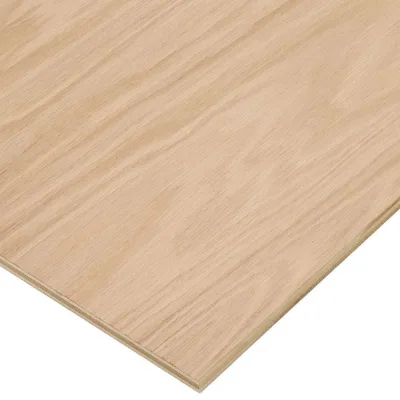
When sourcing hot pressed Baltic birch plywood, buyers must first distinguish between generic plywood and the specific structural integrity offered by birch veneer cores. The term "Baltic birch" traditionally implies a high-quality, void-free core made from birch wood, which provides superior strength and screw-holding capabilities compared to softwood alternatives. In the context of modern manufacturing, the "hot pressed" designation indicates that the veneers are bonded under high heat and pressure, a process essential for achieving the necessary bonding strength and dimensional stability.
Based on observed product attributes, the core composition can vary significantly depending on the specific manufacturer's offering. While the ideal profile for Baltic birch involves a 100% birch core, the market data indicates that cores may also be constructed from poplar, eucalyptus, hardwood blends, or combi (mixed) species. This variation is critical for procurement decisions, as a birch-faced panel with a poplar core will exhibit different mechanical properties than a full birch panel. The face and back veneers are typically specified as birch or UV-treated birch, with thicknesses ranging from 0.3mm to 1.5mm. The specific product models observed, such as HL-Birch Plywood and CONSMOS-FBP, suggest that manufacturers offer distinct lines tailored to different performance requirements.
The physical dimensions of the panels are standardized but require precise verification. Common specifications include a thickness of 18mm, with a standard sheet size of 1220mm by 2440mm. However, the market also supports alternative dimensions such as 1250mm by 2500mm, 915mm by 2150mm, and 1525mm by 3050mm. Thickness tolerances are a vital metric for machining and assembly; observed data suggests a tolerance range of +/-0.2mm to +/-0.5mm. Buyers should verify that the specific supplier can maintain these tight tolerances, as deviations can lead to issues in CNC routing or joinery. The moisture content is another critical technical parameter, typically observed between 5% and 14%, with a specific target range of 10-14% for optimal performance. This range ensures the wood is neither too dry, which could lead to brittleness, nor too wet, which could cause warping during the curing process.
Compliance, Certification, and Environmental Standards
In the global B2B market, compliance with environmental and safety standards is non-negotiable, particularly for products destined for the European Union, North America, or regions with strict indoor air quality regulations. The formaldehyde emission standards are a primary concern. The observed data highlights an "E-Grade: Excellent Grade" classification, which suggests a high level of compliance with low-emission requirements. However, buyers must not assume that all listed products automatically meet this standard without verification. The specific glue types used, such as Phenolic WBP (Water Boil Proof), E0, or E1, directly influence the emission levels. Phenolic WBP glue is generally associated with exterior-grade performance and high durability, while E0 and E1 glues are often marketed for interior applications with lower formaldehyde release.
Certification status is another area requiring rigorous due diligence. The supplied context lists CE, ISO9001, and Carb (California Air Resources Board) as potential certifications. While these are standard markers of quality and safety, the presence of these labels in a product description does not guarantee that every specific batch or model holds active certification. Buyers must request valid, up-to-date certification documents for the specific product model they intend to purchase. The "Carb" reference specifically points to compliance with California's strict formaldehyde emission limits, which is often a prerequisite for selling into the US West Coast market.
It is important to note that while FSC (Forest Stewardship Council) certification is a common industry expectation for sustainable sourcing, the provided data lists it only as low-confidence background information. Therefore, buyers should not assume FSC compliance is inherent to the product unless explicitly confirmed by the supplier. Instead, the procurement strategy should focus on verifying the specific certifications listed in the contract, such as ISO9001 for quality management systems and CE for European conformity. The origin of the product, often cited as Linyi, Shandong Province, or generally Shandong, China, is a known hub for plywood manufacturing. While this location offers competitive logistics, it also necessitates a thorough audit of the supplier's quality control processes to ensure that the "Excellent Grade" claims are substantiated by third-party testing.
Cost Drivers and Economic Factors in Procurement
The pricing structure for hot pressed birch plywood is influenced by a complex interplay of raw material costs, manufacturing complexity, and logistical factors. The observed price range in the market spans from $5 to $700 per unit, a vast disparity that reflects differences in thickness, veneer grade, and total volume. A single sheet of 4mm birch plywood will naturally cost significantly less than a full 18mm or 24mm panel, and the price per square meter can fluctuate based on the grade of the veneer (e.g., AA/AA vs. Cc/Cc).
Volume is a primary driver of cost efficiency. The Minimum Order Quantity (MOQ) varies widely, with observed ranges from 1 unit to 10,000 units. However, a specific attribute notes an MOQ of 20 cubic meters (cbm) for certain high-grade or custom orders. This volume threshold is crucial for buyers to understand, as ordering below this limit may result in significantly higher per-unit costs or the inability to secure the product at all. The density of the material, observed between 680kg/m³ and 720kg/m³, also impacts shipping costs. Heavier panels require more robust packaging and incur higher freight charges, which can erode the savings gained from a lower base price.
Packaging standards play a subtle but significant role in the final cost. The data indicates a preference for "Standard Export Wood Pallet" or "Standard Export Pallet Package" with wooden pallets. This packaging is essential for protecting the panels during long-distance transit, particularly from China to international destinations. However, the cost of this packaging is often embedded in the final price. Buyers should clarify whether the price includes the cost of the pallets and if they are returnable or disposable, as this affects the total landed cost. Additionally, the customization availability noted in the product attributes suggests that non-standard sizes or specific veneer grades may carry a premium. While the base price might be competitive, the cost of customization, such as specific thicknesses like 24mm or unique dimensions like 1525mm by 3050mm, must be factored into the budget.
Typical Applications and Performance Requirements
The versatility of hot pressed birch plywood makes it suitable for a wide array of applications, ranging from heavy-duty industrial uses to high-finish interior projects. The product attributes explicitly state that the material is suitable for both "Indoor" and "Outdoor" usage, a dual capability that depends heavily on the glue type and veneer treatment. For outdoor applications, the use of Phenolic WBP glue is essential, as it provides the necessary water resistance to prevent delamination in humid or wet environments. In contrast, interior applications may utilize E0 or E1 glues, which prioritize low emissions over extreme water resistance.
The specific grain structure, described as "Irregular Grain," is a characteristic of birch plywood that can be either a design feature or a constraint. In furniture manufacturing, the irregular grain can be sanded and finished to create a unique aesthetic, but it may require more labor to achieve a perfectly smooth surface compared to veneers with a uniform grain. The 13-ply construction observed in some specifications indicates a high number of layers, which contributes to the panel's stiffness and resistance to warping. This makes it an ideal choice for cabinetry, shelving, and structural components where dimensional stability is paramount.
The thickness options, ranging from 4mm to 30mm, allow for tailored solutions across different industries. Thin sheets (4mm-9mm) are often used for backing, drawer bottoms, and light-duty furniture. Medium thicknesses (12mm-18mm) are standard for cabinet carcasses, workbenches, and flooring underlayment. Thicker panels (21mm-30mm) are typically reserved for heavy-duty worktops, structural framing, and industrial machinery bases. The "100% Full Birch Plywood" designation suggests a premium product line intended for applications where appearance and strength are equally critical, such as high-end retail displays or custom musical instruments. The "Hot Pressed" manufacturing process ensures that the layers are fused tightly, providing the necessary bonding strength (Class III) to withstand mechanical stress and vibration.
Supplier Evaluation and Quality Assurance Protocols
Selecting the right supplier for hot pressed birch plywood requires a systematic evaluation of their capabilities, reputation, and quality control measures. The observed data points to several key suppliers and product models, but buyers must avoid relying on a single source. Instead, a diversified approach involving multiple suppliers is recommended to mitigate supply chain risks. When evaluating potential partners, buyers should verify the "Company" name and location, such as Baiyisheng or entities based in Shandong Jining. These locations are known for plywood production, but the quality can vary significantly between individual factories.
Quality assurance should begin with a review of the supplier's technical documentation. Buyers must request detailed test reports that confirm the bonding strength, moisture content, and formaldehyde emission levels. The observed bonding strength of "Ⅲ(Nc)" and moisture content of "10-14%" should be verified against actual test data for the specific batch. Additionally, the "Technical" attribute of "Hot Pressed" should be confirmed through site audits or third-party inspections to ensure that the manufacturing process adheres to the claimed standards. The tolerance of "+-0.5mm" is a critical metric for machining; buyers should ask for historical data on thickness consistency to ensure the supplier can maintain this precision over large orders.
Supplier evaluation also extends to their after-sales support and project solution capabilities. The data indicates that some suppliers offer "Online technical support" and "graphic design" services, which can be valuable for complex projects requiring custom sizing or specific design integration. However, these services should be clearly defined in the contract to avoid scope creep. The delivery time, observed as "2 weeks after getting your deposit," is a standard lead time but can be affected by raw material availability and shipping logistics. Buyers should establish clear communication channels to monitor production progress and ensure that the "Standard Export Pallet Package" is prepared correctly to prevent damage during transit.
Long-Term Procurement and Supply Chain Resilience
Sourcing hot pressed birch plywood is not merely a transactional activity but a strategic partnership that requires long-term planning. The variability in core materials (poplar, eucalyptus, birch) and the wide range of specifications (4mm to 30mm) mean that buyers must maintain a flexible procurement strategy. Relying on a single supplier for all thicknesses or core types can expose the business to supply chain disruptions. Instead, buyers should develop relationships with multiple suppliers who can provide different product configurations based on project needs.
The "Customization" attribute available in the market suggests that buyers can tailor products to specific requirements, but this also introduces complexity. Long-term contracts should include clauses that define the process for handling customization requests, including lead times and cost implications. The "20cbm" MOQ for certain orders indicates that smaller buyers may face challenges in accessing the most competitive pricing. To mitigate this, buyers can consider consolidating orders with other partners or utilizing a sourcing agent to aggregate demand.
Finally, the environmental and regulatory landscape is evolving. While the current data shows compliance with CE, ISO9001, and Carb, future regulations may introduce stricter requirements for formaldehyde emissions or sustainable sourcing. Buyers should stay informed about changes in international standards and ensure that their suppliers are prepared to adapt. The "E-Grade: Excellent Grade" observed in the data is a strong starting point, but continuous verification is necessary to maintain compliance. By focusing on technical specifications, rigorous quality control, and strategic supplier relationships, buyers can secure a reliable supply of high-quality hot pressed birch plywood that meets the demands of modern manufacturing and construction.
| Attribute Category | Observed Specification | Verification Requirement |
|---|---|---|
| Core Material | Poplar, Combi, Eucalyptus, Hardwood, Birch | Confirm specific core composition per order |
| Thickness | 4mm to 30mm (Common: 18mm) | Verify tolerance is within +/-0.5mm |
| Glue Type | Phenolic WBP, E0, E1 | Match glue type to Indoor/Outdoor usage |
| Moisture Content | 5% - 14% (Target: 10-14%) | Request moisture test reports for batches |
| Certifications | CE, ISO9001, Carb (Low confidence on FSC) | Validate active certification documents |
| Packaging | Standard Export Wood Pallet | Confirm pallet specifications and protection |
| Lead Time | 2 weeks after deposit | Confirm production capacity and shipping |
| MOQ | 1 to 10,000 units (Some: 20 cbm) | Negotiate volume tiers for pricing |
FAQs
What certifications are available for hot pressed baltic birch plywood?
Certifications such as CE, ISO9001, and Carb are available for this product. Buyers must verify that specific batches hold active certification documents rather than assuming all listed products automatically meet these standards without direct confirmation from the supplier.
Which glue types are used in hot pressed baltic birch plywood?
The plywood uses Phenolic WBP, E0, and E1 glue types. Phenolic WBP provides water resistance for outdoor use, while E0 and E1 glues prioritize low formaldehyde emissions for indoor applications, directly influencing the product's emission grade and durability.
Can hot pressed baltic birch plywood be used outdoors?
Yes, the product is suitable for both indoor and outdoor usage. This dual capability depends on using Phenolic WBP glue for exterior durability, whereas interior applications may utilize different glues that prioritize low emissions over extreme water resistance.
What is the standard thickness tolerance for hot pressed baltic birch plywood?
The thickness tolerance ranges from plus or minus 0.2mm to plus or minus 0.5mm. Buyers should verify that the specific supplier can maintain these tight tolerances, as deviations can lead to significant issues during CNC routing or precise joinery assembly.
How does the core composition vary in hot pressed baltic birch plywood?
The core can be made from birch, poplar, eucalyptus, hardwood, or combi species. While ideal Baltic birch implies a 100% birch core, market data shows variations where birch-faced panels may have different core species affecting mechanical properties.
What is the typical moisture content for hot pressed baltic birch plywood?
The moisture content typically falls between 5% and 14%, with a target range of 10-14%. This range ensures the wood is neither too dry, which causes brittleness, nor too wet, which could lead to warping during the curing process.